
Salt Lake Temple Stories: 10 Years of Peace Prediction, Then, The Utah War
To watch on Youtube click here: https://youtu.be/R-16JqaTyTA
To listen on Spotify click here: https://open.spotify.com/episode/3xExlbCb2DLjReTdvHVyDa?si=RTKQY6EaQ6a2Co6zD2HH7Q
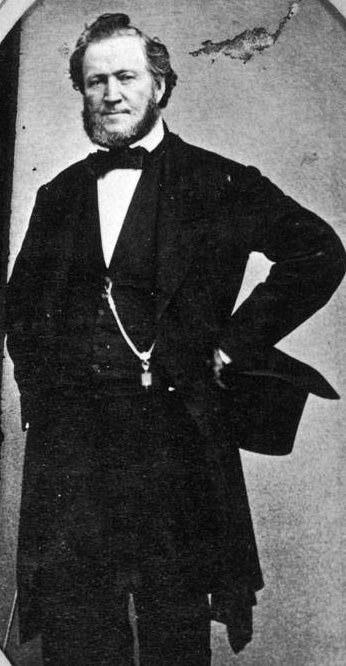
Brigham Young, the second Prophet of The Church of Jesus Christ of Latter-day Saints was faithful, and determined to do the Lords will. Brigham had the great responsibility to bring the Latter-day Saints across the plains to Utah, and set up communities. It was a challenging responsibility, and with the help of the Lord, Brigham was able to accomplish the Lords will. The Latter-day Saints were run out of their homes in the East, and did not know if they would find peace to practice their religion, even though they were hundreds of miles away from their abusers. Brigham had exceptional faith in his Father in Heaven, knowing that if it is Gods will, it will come to pass. Brigham knew that God would intervene should the need arise. With the faith of Brigham and the help from the Lord the members of The Church of Jesus Christ of Latter-day Saints helped the "desert blossom like a rose". Brigham did not know the trials he would be asked to face, but he knew with the Lords help he would accomplish a great work.
When the Latter-day Saints first arrived in the Utah territory they were plagued with many trails. Getting to Utah with great difficulty was only the first step. Building cities and communities in the vast dessert with unknown dangers was a constant worry for the Latter-day Saints. Then, there was the issue of the United States Government, weather they would leave the Saints alone to practice their religion, or would they step in on the rights the Latter-day Saints. Brigham Young had a lot to worry about, and it seems like he worked on one problem at a time, but one of the most coincidental, or maybe prophetic prophecies given by the Prophet Brigham Young was a offhanded remark he voiced to the earliest settlers of the Salt Lake Valley when he said: "If the people of the United States will leave us alone for ten years, we will ask no odds of them." This statement did not seem like a great proclamation when it was said but it truly became a prophetic statement in ten years time. It seemed as though it was just a simple statement of the possibilities of all the good that could happen, if they were left alone. It became a statement of prophetic proportion when ten years to the day, when the Latter-day Saints got word that Johnstons army was marching into Salt Lake.
The Latter-day Saints were at their 10 year celebration of entering into the Salt Lake Valley when the news came in on the United States Army marching towards them, and fear spread. The Latter-day Saints were still very fearful of the mobs that had driven them from their homes in Missouri and in Nauvoo. They experienced great atrocities including the raping of their wives, beating and abusing men and children. The Latter-day Saints were worried the same thing would happen again. During the Missouri years the United States government did not protect the Saints, and in some instances instigated the terror. Leaving the United States for their safety was the only option left for the Latter-day Saints. Now, having lived in the Utah territory for ten years and hearing that the United States army is on the way, fear spread quickly.
The past ten years of living in the west, the Saint believed that the Rocky Mountains would be the place to find the peace they sought. For ten years they lived without persecution in the safety of western United States. The Saints had built beautiful homes, towns, and made the west "blossom as a rose". They had created through blood, sweat and tears an area of which they were very proud. Now on ten years to the day of "being left alone" their time was up, and the Latter-day Saints had to prepare quickly to face the United States Army, marching towards them.
For ten years the Latter-day Saints had been building homes, communities and settlements all throughout the west. With a large importance on the next Temple of the Lord, The Salt Lake Temple. Even though the land had been selected and sectioned off since the first day the Saints arrived in the Valley, it was five years before any dirt was even moved to build the temple. Now, having worked on the temple for the past five years, they knew the Temple was vulnerable.
The Latter-day Saints had gathered in Big Cottonwood Canyon, where they planned to have a great party to celebrate 10 years in the Valley. More than 2,500 people gathered with six brass bands. This party was planned to be the largest celebration since the temple cornerstone ceremony, similar events were planned for other territories like Pleasant Grove, Provo, Cedar City, Nephi and Manti. The festival started on the morning of the 24 of July with songs and prayers being offered. Then, the party of singing, dancing and visiting throughout the camp.
Around noon, a group of four exhausted and dirty men rode into the campground: Bishop Abraham O. Smoot, Elder Judson Stoddard, Judge Elias Smith, and Orrin Porter Rockwell. These men brought the most unwelcome news imagined. Wilford Woodruff recorded "They informed us that the United States had taken away the mail contract [and] that a new governor [and] judges & 2,500 troops would start for Utah soon".
Brigham allowed the celebration to continue through the afternoon, maybe allowing the Saints a few more care free hours before the horror of the situation was announced. After a few hours, Brigham went out and informed the Saints what was coming. "After the first shock there was little or no confusion. [Brigham] told the people to go on with their merrymaking, and the days festivities ended with a dance, as had been originally planned."
With the army marching towards the Saints the big question was would Brigham ask the Saints to fight or leave? These were the only two options for the settlers. They knew that a fight would cost the lives of people they loved. Leaving would be abandoning all their years of hard work and efforts in building the town and the areas surrounding, and also the beautiful Temple they had been working on which was said: "the erection of which was the pinnacle of all their fondest hopes and dreams".
Brighams decision
"We have built cities in the East for our foes to occupy; our very temples have been desecrated and destroyed by them but with the help of Israel's God we will prevent them enriching themselves with the spoils of our labors in this mountain retreat," Brigham told his friends.
Brigham knew that if they were forced to leave their homes and farms, they would not leave them to invaders. They planned to destroy everything they had built, and their enemies would not profit off the Saints again.
Even with the talk of extreme action Brigham admitted to the possibility that a new governor could come in peace and should be given a chance to prove his intentions. "If the governor and officers wished to come and would behave themselves well they would be well treated," but if they did not behave themselves well he "felt determined no more to submit to oppression either to individuals, towns, countries, states or nation."
On the day they entered the Valley, Brigham said that if they would be left alone for ten years they "will ask no odds of them". Time was up for the Latter-day Saints, and they did not know why. Even though they did not understand the reasons behind the army marching towards them, they knew the abuses of power that had come at them before. This time, they were prepared. They would not depend on any group to help them. Last time they hoped for help from the State or the Country to no avail. This time it was the United States army coming, but the Saints had the upper hand, and they would use it. Until they knew why the government was marching they would prepare to fight.
In a talk given by James E. Faust called Brigham Young, A Bold Prophet, he spoke about the conflict that Brigham had to face saying:
As he led the Saints across the American wilderness, Brigham Young believed strongly that this journey to the West was the Lord’s errand—therefore they could not fail. But being the practical man that he was, he knew that success had a price. It could only come with diligence, sacrifice, and hardship. And he understood that, even with their best efforts, they could not do it alone—they would need God’s help. But his great faith and sense of purpose brought him both confidence and peace during the winter and spring of 1847 as he prepared for the long trek West.
Part of President Young’s unwavering confidence came because he knew the plan was not his own. As he told the Saints nearly 10 years later after their arrival in the valley, “I did not devise the great scheme of the Lord’s opening the way to send this people to these mountains.” Who did? “It was the power of God that wrought out salvation for this people,” he insisted. “I never could have devised such a plan” (JD 4:41 [31 August 1856]).
Further tests of President Young’s faith were still in store. The severest one came during 1857 and 1858 as thousands of U.S. troops—one-third of the standing army of the United States—marched to Utah escorting Alfred Cumming, who had been sent to replace Brigham Young as governor. President Young knew only too well from their experience in Missouri what enemies can do when backed by military authority. Yet he was confident that if the Saints did all in their power, the Lord would help them. President Young declared martial law and mobilized the territorial militia to do everything short of bloodshed to slow down the advancing troops. Grasslands and supply wagons were burned, provisions and cattle confiscated, and the advance units harassed day and night. Still they kept coming—ever nearer—until winter struck in their favor as the timely arrival of heavy snows stopped the army in its tracks, forcing it into winter camp 80 miles from Mormon settlements."
Brigham had an unwavering convicting and faith in his Savior Jesus Christ, and knew all would work out. He did not know the details or how it would all be okay, but acting in faith, with a firm understanding that the Lord would stop them if it was wrong Brigham moved forward with his plan to protect the Latter-day Saints from the army marching towards them.
Brigham said:
"God is here: his influence fills immensity. He has his messengers throughout all the works of his hands. He watches every one of his creatures; their acts, their affections, and thoughts are all known to him; for his intelligence and power fill immensity [see D&C 88:6–13]. Not that his person does, but his Spirit does; and he is here teaching, guiding and directing the nations of the earth (DBY, 32)."
References:
40 year saga of building SLC Temple p. 18, 123
Brigham Young, A Bold Prophet by James E. Faust 21 Aug 2001
Related Posts

Pres. Nelsons Vision of Two Little Girls "We're Not Sealed to Anyone"
September 30, 2026
To watch on Youtube click here: https://youtu.be/BZjuOsGWHVI To listen on Spotify click here:...

The Boy in the Grease Pit
September 21, 2026
To watch on Youtube click here:https://youtu.be/DsnWiXrgwoE To listen on Spotify click here:...
Russell M. Nelson Inspired Heart Surgery on St. George Patriarch
September 15, 2026
To watch on Youtube click here: https://youtu.be/HvhMi1TxjgY To listen on Spotify click here:...
Joseph Smith Family Search Memories
July 14, 2026
There are many inspiring stories about the Prophet Joseph Smith. He was sent by a loving Father in Heaven to teach His children on Earth. There are...

The Other Eminent Men of Wilford Woodruff
June 5, 2026
Artwork credit: Vision of Wilford Woodruff, by Ken Corbett To watch on Youtube click here: https://youtu.be/vMDMss6lGrQ To listen on Spotify click...

Salt Lake Temple Stories: Cornerstone Ceremony of the Salt Lake City Temple
May 23, 2026
To watch on Youtube click here: https://youtu.be/QE6ldwnyGJU To listen on Spotify click here:...
Who's Looking for Me? President Nelsons Story
May 18, 2026
To listen on Spotify click here: https://open.spotify.com/episode/2XnAptPeygDlV02X1byiU9?si=bz8pm2oYR5qo3x_Mm31RSQ To watch on Youtube click here:...

Thomas S. Monson on Visiting the Sick
May 18, 2026
To watch on Youtube click here:https://youtu.be/BYbMwE3T2p0 To listen on spotify click here:...

Spencer W. Kimball's Heart Operation by Russell M. Nelson
March 20, 2026
To listen on Spotify click here: To watch on Youtube click here: https://youtu.be/Op5lef0Ljug While in Manchester England, in 1971, Spencer W....

Salt Lake Temple Storie: Adobe Brick for the Salt Lake Temple
March 18, 2026
To watch on Youtube click here: https://youtu.be/9LZKg4bpjrc To listen on Spotify click here: In the year 1847, the Latter-day Saints first arrived...