
Salt Lake Temple Stories: Cornerstone Ceremony of the Salt Lake City Temple


To watch on Youtube click here: https://youtu.be/QE6ldwnyGJU
To listen on Spotify click here: https://open.spotify.com/episode/4E11WoJZoWFBMpgszs4GHI?si=b-owRMaBQSuF9bZE_YT6wg
Five years after the arrival of the Latter-day Saints in the Salt Lake Valley, the town was functioning and it was time to get more serious about building the Salt Lake City Temple. The Temple Lot had been the center of Salt Lake City since the arrival, but the city had no Temple on the lot. Even five years later no dirt had been moved in preparation to build the Temple on the Temple lot. Finally, in 1853 the Prophet Brigham Young became serious about getting the Salt Lake Temple started. Brigham Young decided the Groundbreaking Ceremony would occurred in February 1853. While attending the Groundbreaking Ceremony the Prophet Brigham Young informed the Saints that the Corner Stone of the Salt Lake Temple would be laid on April 6, of the same year, 1853. This gave the Saints only forty-three days to dig the foundation and prepare the area for the cornerstone, it was a tall order and time to get serious about getting this temple built.
With only forty-three days to get the area ready for the cornerstone ceremony, it was apparent there would not be enough time to empty out the entire square of the temple. Instead they dug out long trenches measuring 193 feet, the east-west trench 125. To remove that amount of dirt, for the foundation of the temple, workers would need remove more than 200,000 cubic feet of dirt weighing more than 80,000 tons. To meet their goal they would have to cart away almost 1,900 tons of dirt each day! All this was before machinery was available to help, they were doing this by hand.
After the groundbreaking ceremony the weather was unpredictable. Snow fell twice within a week after the groundbreaking ceremony, and then multiple times throughout the month. The Saints worked through the cold and snow. All men and boys who were physically able were asked to donate one day in every ten digging the site on the temple. Somewhere between 150 and 200 men and boys were working the on the site on any given day.
For the foundation of the Temple Brigham Young had exhorted the men in the crowd to build a railroad track to "the quarry". Brigham said: "We cannot commence to lay rock here without time, and we cannot get the stone for the foundation [until] the railroad from this place to the quarry is completed." Brigham did not specify which quarry because there was only one quarry at the time, the Red Butte Canyon quarry. Red Butte Canyon has primarily Nugget Sandstone, a reddish-brown, iron-rich, fine-grained sandstone. With Brighams call to finish the railroad line to the quarry, much was worked on, but not finished. They needed four miles of track between the groundbreaking ceremony an the cornerstone ceremony, they were out of time to finish the railroad and would have to haul the cornerstones by ox and wagon to the temple site from the quarry.
They needed four large stones for the cornerstone ceremony. Days before the Cornerstone Ceremony they had late season snowfall, and it made the area a muddy mess. The weather made getting the cornerstones from the quarry to the temple lot a concern. Even the most experienced driver would struggle to navigate through mud and melting snow with a wagon laden the a few ton of rock. The late season snow could stop the whole ceremony.
Fortunately, the late season snow did not stop the cornerstones from getting down the mountain. On April 2, the southeast and northeast cornerstones were delivered to the temple lot. The other two were delivered the following Monday or Tuesday.
Each block was cut roughly two feet by four by six. This means each block would have weighed 5,400 pounds! It would have required a very powerful ox team, or several strong horses to pull it out, but they did it!
Cornerstone Ceremony
The morning of the Cornerstone Ceremony, April 6, 1853 was a mild spring morning. Many would have come into town for the general conference, but would have been thrilled to be a part of the cornerstone ceremony happening at the same time.
Brigham later describing the day said "The sun, the sky, the atmosphere, the earth, appeared neither too cold nor too hot nor lukewarm." "All seemed filled with life; adapted to each soul, to cheer and make happy every individual of the many thousands of aged, middle-aged and youth, who had assembled from the near and remote parts of the inhabited valley."
The general conference was in the Adobe Tabernacle. Brigham opened the conferences at ten o'clock, mentioning the progress of the Church since the organization twenty-three years before.
The choir sang "On Mountain Tops in Latter Days" John Taylor said the opening prayer. Then the choir sang "Come all Ye Saints of Zion." After the Hymn the saints exited the building for the ceremony.
They started with a Sabbath-day parade. The parade started with the color guard bringing the United States Flag, next a blue and white flag featuring stars, stripes and world saying 'Kingdom of God' across it. Next, the Nauvoo Brass Band marched. Then, another band, led by Dominico Ballo, then another Military guard followed by a small group of soldiers. Then, came the first Presidency with Brigham Young and his counselors Heber C. Kimball and Willard Richards, and "Uncle John" Smith, the presiding patriarch. The rest of the Church leaders followed after, the Quorum of the Twelve Apostles, the Presidency of the Quorum of the Seventy, and other senior and local leaders. Near the end of the line was the architect, Truman O. Angell and a number of workmen. The end was a military guard to end the parade.
The parade route was not long and when they all finally arrived at the temple lot, the military units that had marched took up station between the crowd and the trenches. Positioned there to stop anyone from falling into the seventeen foot trenches.
They started the ceremony with an opening hymn. There were four discourses that day, for each corner of the new Temple. The first was done by Thomas Bullock, who stepped forward to give the oration in Brighams place. Brigham did not address the congregation that day, speculation was that he could have been sick and trying to save his voice. It does appear as though Brigham had written the talk in advance, and Thomas Bullock delivered the speech.
He said:
"This morning we have assembled on one of the most solemn, interesting, joyful, and glorious occasions, that ever has, or will transpire among the children of men. . . And I congratulate my brethren and sisters that it is our unspeakable privilege to stand here, this day, and minister before the Lord, on an occasion which has caused the tongues and pens of prophets to speak and write for many scores of that centuries which are past."
He taught about the temples past, speaking of the portable Tabernacle in the time of Moses that housed the ark of the covenant until God revealed to Solomon a pattern for a permanent temple to shelter it. He explained the temple was built, destroyed, rebuilt, desecrated, purified, expanded and destroyed again. Since that time there has been no temples on Earth where God could visit His people and teach them His ways. He then spoke of the apostasy and the restoration of the gospel through the Prophet Joseph Smith.
Bullock said:
"The preparatory ordinances there [in the Kirtland Temple] administered through accompanied by the administartion of angels and the presence of the Lord Jesus, were but a faint similitude of the ordinances of the House of the Lord in their fulness; yet many through the instigation of the devil, thought they had received all, knew as much as God, apostatized, and have gone to hell; but be assured, brethren, there are but few of the elders of Israel, now on earth, who know the meaning of the word endowment; to know they must experience, and to experience, a Temple must be built."
Bullocks written text explained more:
"Your endowment is, to receive all those ordinances in the House of the Lord, which are necessary for you, after you have departed this life, to enable you to walk back to the presence of the Father, passing the angels who stand as sentinels; enabled to give them the key words, the signs and the tokens pertaining to the Holy Priesthood, and gain your eternal exaltation in spite of earth and hell."
Bullock then challenged the Saints to step up and help build the temple.
He ended the discourse saying "We dedicate this, the South-East Corner Stone of this Temple, to the Most High God. . . May it remain in peace till it has done its work, and until He who has inspired our hearts to fulfill the prophecies of his holy prophets, that the House of the Lord should be reared in the 'Tops of the Mountains,' shall be satisfied and say it is enough."
Heber C. Kimball followed with an extended prayer.
Then, the choir sang a song written by Eliza R. Snow.
The south-west cornerstone was done by Edward Hunter, the Presiding Bishop of the Church who spoke to the congregation. Followed by a prayer by Bishop Alfred Cordon, to pray over the cornerstone.
The Northwest corner was done by John Young, the President of the Nigh Priests Quorum, and he spoke standing on top of the stone.
John Young:
"I very well know, that, at the commencement of the Temples that have heretofore been built to the name of the Lord by this people, the devil has always moved his artillery with greater power and activity at the time.. . This is the foundation of the fourth Temple that the Latter-day Saints have laid; and I pray that we shall all feel nerved up with power, to accomplish the great and glorious work with we are called to perform." He thanked the God that there was a prophet on the earth and shared his feelings that "while these stones were being laid, that the angels of God were round about us."
George B. Wallace said a short prayer.
The north-east cornerstone was laid last with Parley P. Pratt who rose to address the audience. Pratt spoke of the connection of the living and the dead in the Temple of God. He exhorted the Saints to prepare for the opposition that would come with the building of the Temple. He said that the devil himself would try to stop them from building this temple. He warned the Saints that a fight was coming, in fact it had already begun. He said "From the moment the ground was broken for this Temple, those inspired by him [Satan] have commenced to rage; and he will continue to stir up his servants to anger against that which is good; but if we are faithful, the victory is ours." and with those words he ended his discourse.
Elder Orson Hyde offered the final prayer. At the end of the prayer Elder Hyde asked that the temple construction be "speedily erected and finished" for the completed House of the Lord might "prove a beacon light to the nations who are floating on the sea of time in a dark and cloudy day."
After the prayer the choir sang, and the crowd turned to the Prophet Brigham Young. "Brethren and sister, I bless you in the name of Jesus of Nazareth, and pray my Father in Heaven to encircle you in the arms of his love and mercy; protect us until we have finished this Temple, receive the fulness of our endowments therein and then build many more," and with those words Brigham dismissed the crowd.
Five years, eight months and thirteen days after the first Saints had arrived in the Salt Lake Valley, the cornerstones of the Salt Lake Temple were laid.
Russell M. Nelson said:
"The earliest [temples] stand as monuments to the faith and vision of our beloved pioneers. Each temple constructed by them resulted from their great personal sacrifice and effort. Each one stands as a stunning jewel in the crown of pioneer achievement."
—Russell M. Nelson
These faithful pioneers felt the importance of Temple covenants. They did everything in their power to receive those sacred blessings. The very beginning phases of building the Salt Lake Temple would have felt so promising, and exciting. They had no idea the trials they would soon face, and the struggles that would come as they worked to build and finish this Temple to God. Even if they knew how difficult the road would be they would still have sacrificed all for Him. They responded to the call with faith and knew it was in the Lords hands. Faithfully acknowledging all would be for their good. It is a great blessing to know the history of these faithful pioneers and be blessed by the fruits of their labors and sacrifices to their Father in Heaven.
References:
"Forty Years, the saga of Building the Salt Lake Temple by Mark Henshaw" Chapter 3, p 72-74, 75-78
Related Posts

Pres. Nelsons Vision of Two Little Girls "We're Not Sealed to Anyone"
September 30, 2026
To watch on Youtube click here: https://youtu.be/BZjuOsGWHVI To listen on Spotify click here:...

The Boy in the Grease Pit
September 21, 2026
To watch on Youtube click here:https://youtu.be/DsnWiXrgwoE To listen on Spotify click here:...
The Pan Filled With Food
September 21, 2026
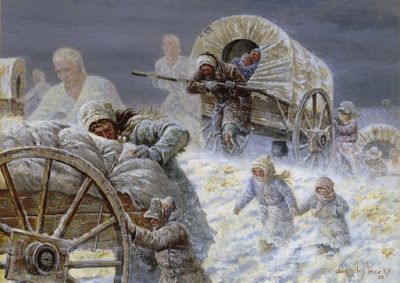
Art by: Clark Price To watch on Youtube click here: https://youtu.be/EvyfKZ1vbhY To listen on Spotify click here:...
Russell M. Nelson Inspired Heart Surgery on St. George Patriarch
September 15, 2026
To watch on Youtube click here: https://youtu.be/HvhMi1TxjgY To listen on Spotify click here:...

The Women Who Helped Save the Book of Commandments
September 2, 2026
The horrendous persecution heaped upon the Latter-day Saints was once common knowledge but many today downplay the persecution. Some say the...
Joseph Smith Family Search Memories
July 14, 2026
There are many inspiring stories about the Prophet Joseph Smith. He was sent by a loving Father in Heaven to teach His children on Earth. There are...

The Other Eminent Men of Wilford Woodruff
June 5, 2026
Artwork credit: Vision of Wilford Woodruff, by Ken Corbett To watch on Youtube click here: https://youtu.be/vMDMss6lGrQ To listen on Spotify click...
Who's Looking for Me? President Nelsons Story
May 18, 2026
To listen on Spotify click here: https://open.spotify.com/episode/2XnAptPeygDlV02X1byiU9?si=bz8pm2oYR5qo3x_Mm31RSQ To watch on Youtube click here:...

Thomas S. Monson on Visiting the Sick
May 18, 2026
To watch on Youtube click here:https://youtu.be/BYbMwE3T2p0 To listen on spotify click here:...

Spencer W. Kimball's Heart Operation by Russell M. Nelson
March 20, 2026
To listen on Spotify click here: To watch on Youtube click here: https://youtu.be/Op5lef0Ljug While in Manchester England, in 1971, Spencer W....