
History of The Polynesian Cultural Center
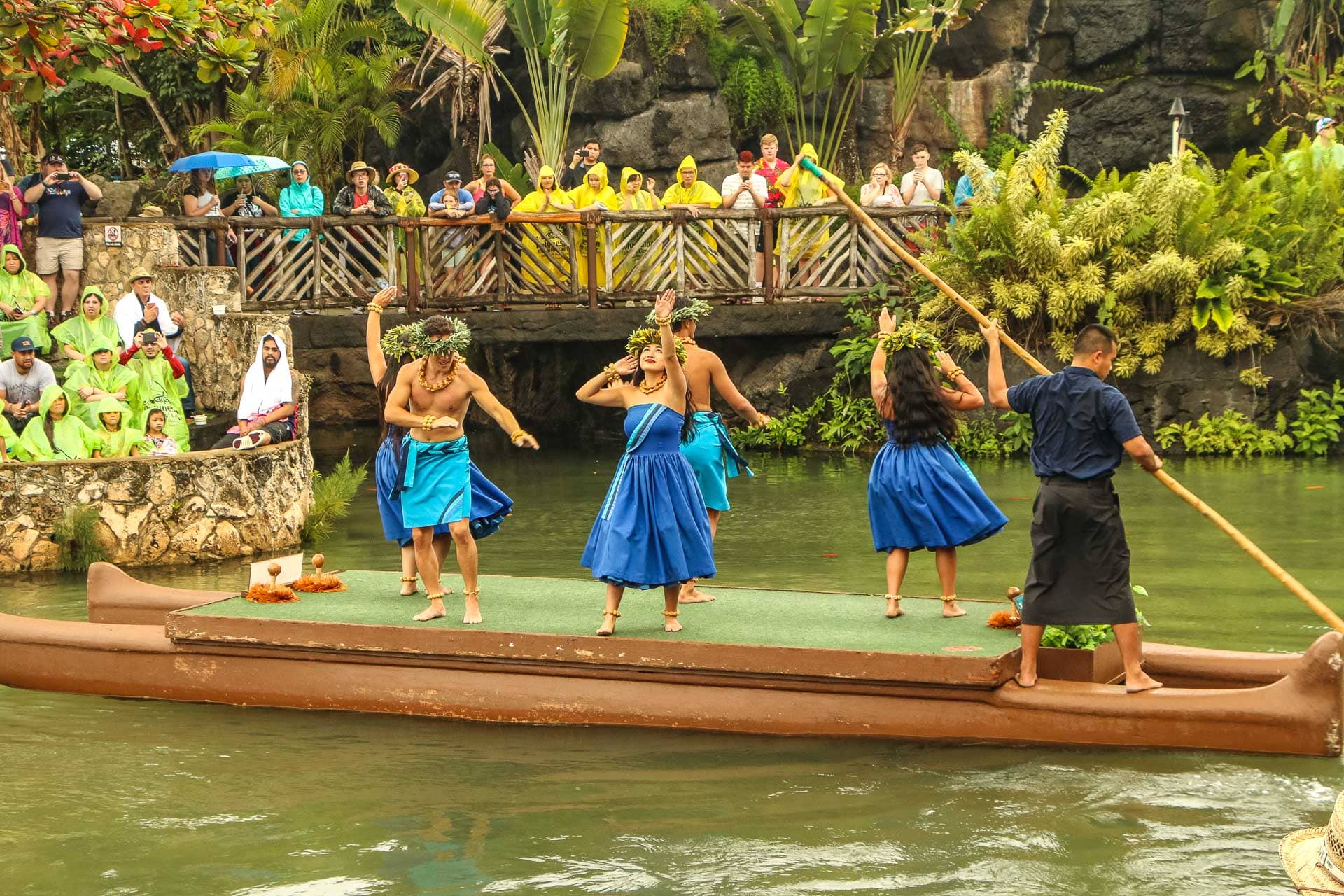

In the very beginning of the restoration of The Church of Jesus Christ of Latter-day Saints the Lord commanded His saints to "gather". The gathering of the Lords children has looked different over time. In the 1830's all were commanded to gather to Kirtland, then Missouri, then to Nauvoo, and ultimately the Saints gathered to the Western United States. Over time, God has told His children to gather Zion wherever righteous are, throughout the world. Ultimately preparing the world for the return of His Son Jesus Christ. This gathering of the Lords children is evident in the Pacific Islands. There is a very special feeling on the Hawaii Islands, it is a blessed land of God. When early missionaries of the Church went to the islands of the South Pacific they were told the gathering would be in the village of Laie Hawaii. People from all different islands of the sea came to La'ie, making a community of Saints to uplift and build each other. This small group of gathering Saints did not know, at the time, of the vastness of their mission until years later. This small group of Hawaiian Saints set their faith on the Savior Jesus Christ and shared their beliefs and culture with millions by being the foundation of the Polynesian Cultural Center.
In the early days of the gospel of Jesus Christ being spread through Hawaii, there were prophecy after prophecy of the importance of the Hawaii Islands to the Gathering of the Lord. President Hinckley, as an Apostle in 1981, affirmed this importance saying: “I never come to La‘ie that I don’t have a feeling that this place occupies some peculiar position in the plan of the Lord”.
After the end of World War II in 1946, the faithful La'ie saints desired to build a new chapel. The chapel the Saints had been attending had burnt down during a painting accident. Using a blow torch to strip the paint from the walls burnt the whole chapel down. There were no funds to build a new chapel. The Relief Society President of the of the La'ie ward, Viola Kehau Kawahigashi, suggested to the Bishop of the ward to hold a traditional hukilau for the tourists. This idea had been used before to help build the Honolulu tabernacle in 1939, so the Viola was hoping it would work again.
The date was set for this fund-raising hukilau to be held January 31, 1948. They charge 3$ a ticket, and many argued that was too much. Others skeptics worried about the unpredictable weather, from that time a year. Viola persisted, feeling strongly that it was an important work she was doing, and that God would bless their efforts.
Viola distributed 500 of the 700 tickets to the hotels in and other sales points. Two days before the event Viola went to check on ticket sales and found that only 250 of her tickets had been sold. She was discouraged but also determined. Not giving up hope, checking again, Viola found that by Friday at noon the hotels had sold out of all of their tickets! The first hukilau had over 2,000 people attended, it was a success.
For the hukilau, they prepared to put on a show for the tourist from different islands of the sea. There were many very talented members from Hawaii who had held onto their culture and traditions, who were excited to share their talents. Members from the island of Samoa were also willing to share their long held traditions for the hukilau.
At the hukilau's they would have expert fishermen decide when the fish were running and organize the villagers to lay the net and then pull it in. They would divide up the fish according to who had work and who needed fish. For the presentation, they would have the tourist help pull in the nets with the gathered fish, and they would be treated to authentic Hawaiian and Samoan dancing and presentation of a royal Hawaiian court while the underground oven imu cooked the main course of the luau. Other handcrafts were made by the relief society were sold and all proceeds would go to the building of the La'ie Chapel building fund.
Sister Kawahigashi vision changed La'ie forever. She saw what a hukilau could do to help the little town of La'ie, which only had 800 people living there at the time, and over time it was made into one of the biggest gathering places in Hawaii. In 1955 the Church opened BYU Hawaii, which started a different kind of gathering in Hawaii. In 1962 President David O. McKay approved the opening of the Polynesian Cultural Center to help the fund scholarships for students at BYU-Hawaii and to preserve Polynesia's culture.
The the songer/song writer Jack Owens wrote the song "Oh, we're going to a Hukilau" in 1948 after attending one of the first Hukilaus.
Today the PCC is one of the most visited tourist attractions in Hawaii with 700,000 visitors a year. Since opening, they estimate over 32 million people have attended the PCC.
In the 1950s and 1960s, missionaries from Hawaii, Tonga, Samoa, New Zealand, Tahiti, the Cook Islands, Fiji, and North America were called to lend their cultural talents and building skills to help construct the Church College of Hawaii (now Brigham Young University–Hawaii), the Polynesian Cultural Center, and a new temple visitors’ center. Forty-seven missionaries from Tonga and Samoa received their temple ordinances on May 3, 1960—an example of the spiritual blessings that accompanied their temporal work (see Building Missionaries in Hawaii, 1960–1963, Church History Library, Salt Lake City, 100).
One missionary, Matte Teʻo, was severely burned before leaving Samoa, but he came to Hawaii anyway. Doctors feared his charred hand might need to be amputated. Many of his fellow missionaries prayed for him. While in the temple, Brother Teʻo cried out to the Lord, “Touch this hand.” “Fix this hand so I can help whatever little bit I can.” He began to heal immediately. Today his hand bears no scar. He now serves as a sealer in the Laie Hawaii Temple and says, “This temple … has a powerful influence throughout these communities not only here, but throughout the Pacific” (in Christensen, Stories of the Temple in Lāʻie, Hawaiʻi, 328–330).
References:
"Gathering to La'ie" by Riley M> Moffat, Fred E. Wood, Jeffrey N Walker (p. 139-144)
Related Posts
Faith of the New Zealand People, Healing a Prophet of God
January 16, 2026
To watch on Youtube click here: https://youtu.be/lMVn-JUpvgs To listen on Spotify click here:...

Laie Hawaii Temple Family History Miracles
October 5, 2025
To watch on Youtube click here: https://youtu.be/gi7dAjktIOs To listen on Spotify click here:...

The Grounds of the La'ie Hawaii Temple
August 29, 2025
To watch on Youtube click here:https://youtu.be/XdSV_-fBbBw To listen on Spotify click here:...

Architectural Design of the La'ie Hawaii Temple
August 23, 2025
To watch on Youtube click here: https://youtu.be/UxzdyY1Io-s To listen on Spotify click here:...

First Missionaries in Hawaii
August 20, 2025
To watch on Youtube click here: https://youtu.be/xVqNsL22UPs To listen on Spotify click here:...

Laie Hawaii Temple, Lumber Miracle
August 18, 2025
To watch on Youtube click here: https://youtu.be/pGooVgAY_ro To listen on spotify click here:...

When Prophet Lorenzo Snow Almost Drowned
November 14, 2024
Watch on Youtube: Listen on Spotify: Lorenzo Snow, the fifth prophet of The Church of Jesus Christ of Latter-day Saints led a very eventful life...

Missionaries Called to the Gold Rush
April 11, 2024
Missionaries called to the Gold Rush in California The Church of Jesus Christ of Latter-day Saints, George Q. Cannon

Joseph F. Smith, Defending his Sister
February 29, 2024
Joseph F. Smith defending his sister to the school master Church History LDS

Joseph F. Smith's Mission to Hawaii
February 27, 2024
Joseph F. Smith first mission to Hawaii Church History LDS